★ Locally Trusted With 3175+ 5-Star Reviews ★

Back to Blog

What Size Furnace Do I Need?
Choosing the right size furnace for your home is essential for maintaining comfort and energy efficiency. A furnace that’s too small won’t heat your home adequately, while one that’s too large can lead to uneven heating, higher energy bills, and more frequent furnace replacement. So, how do you determine what size furnace you need? This guide will walk you through the basics of calculating the correct furnace size, including the role of BTUs, the size of your home, and other important factors.
Understanding Furnace Sizing: What Are BTUs?
When it comes to selecting the right size furnace, the first thing you’ll need to understand is BTU, which stands for British Thermal Unit. BTUs are a measure of heat output, and the number of BTUs you need is directly related to the size of your home and the climate in which you live. Furnaces are typically rated in BTUs per hour, which indicates how much heat the furnace can produce in an hour.
So, how many BTU do you need for your home? To answer that question, you need to take into account the size of your house, the insulation, and your geographic location. A furnace that works well in a colder climate like New England might be too powerful for a home in a warmer region.
How to Calculate BTUs Per Square Foot
A good rule of thumb for determining how many BTUs you need is to calculate the BTU requirements based on the square footage of your home. On average, you will need around 30 to 60 BTUs per square foot, depending on the climate and how well-insulated your home is. Here’s a general guide:
- In cooler climates: 45 to 60 BTUs per square foot. This would apply to regions with colder winters, such as New England, where homes need more heating to maintain a comfortable temperature during the colder months.
- In moderate climates: 35 to 45 BTUs per square foot. These areas have mild winters and moderate summers, such as the Mid-Atlantic or Pacific Northwest, where heating and cooling needs are more balanced.
- In warmer climates: 30 to 35 BTUs per square foot. This would refer to regions with hot summers and mild winters, like the Southern U.S. (Florida, Texas, Arizona), where cooling needs are higher but heating demands are lower.
For example, if you have a 2,000-square-foot home in a moderate climate, you would multiply 2,000 by 40 BTUs (a median figure) to get a total of 80,000 BTUs. This means you would need a furnace that can produce approximately 80,000 BTUs to efficiently heat your home.
Additional Factors That Influence Furnace Size
While BTU per square foot provides a solid starting point, other factors can also affect what size furnace you need. Consider the following:
1. Insulation Quality
The better insulated your home is, the fewer BTUs per square foot you’ll need. Well-insulated homes retain heat more efficiently, meaning you won’t need as powerful a furnace. If your home is older or has poor insulation, you may need a furnace with higher BTU output to compensate for the heat loss.
2. Window Quality
Like insulation, the quality of your windows can also impact the size of the furnace you need. Single-pane windows or older windows without proper sealing allow heat to escape more easily, which can require a more powerful furnace. Double-pane or energy-efficient windows help keep heat inside, lowering your BTU needs.
3. Home Layout
The layout of your home can influence how many BTUs you need as well. Multi-story homes may require a larger furnace to ensure even heating across all floors. Additionally, homes with high ceilings or large open spaces can require more BTUs to maintain a comfortable temperature.
4. Geographic Location
Your geographic location plays a big role in determining your heating needs. Homes in colder regions will require more BTUs to keep a home warm, while homes in milder climates can use less. For example, if you’re in the northern part of the U.S., you may need a furnace with a higher BTU rating compared to someone living in the southern U.S.
Signs It’s Time for a Furnace Replacement
If you’re asking yourself “What size furnace do I need,” you may be in the market for a furnace replacement. There are several signs that indicate your current furnace may no longer be the right fit for your home:
- Age: Most furnaces last between 15 and 20 years. If your furnace is nearing the end of its lifespan, it may be time to consider a replacement with a properly sized unit.
- Frequent Repairs: If you’re constantly repairing your furnace, it might not be sized properly, or it could simply be wearing out.
- Rising Energy Bills: An oversized or undersized furnace can lead to inefficiency, resulting in higher heating bills.
- Uneven Heating: If some rooms are too hot while others are too cold, it could be a sign that your furnace is either too large or too small for your home.
Professional Furnace Installation Matters
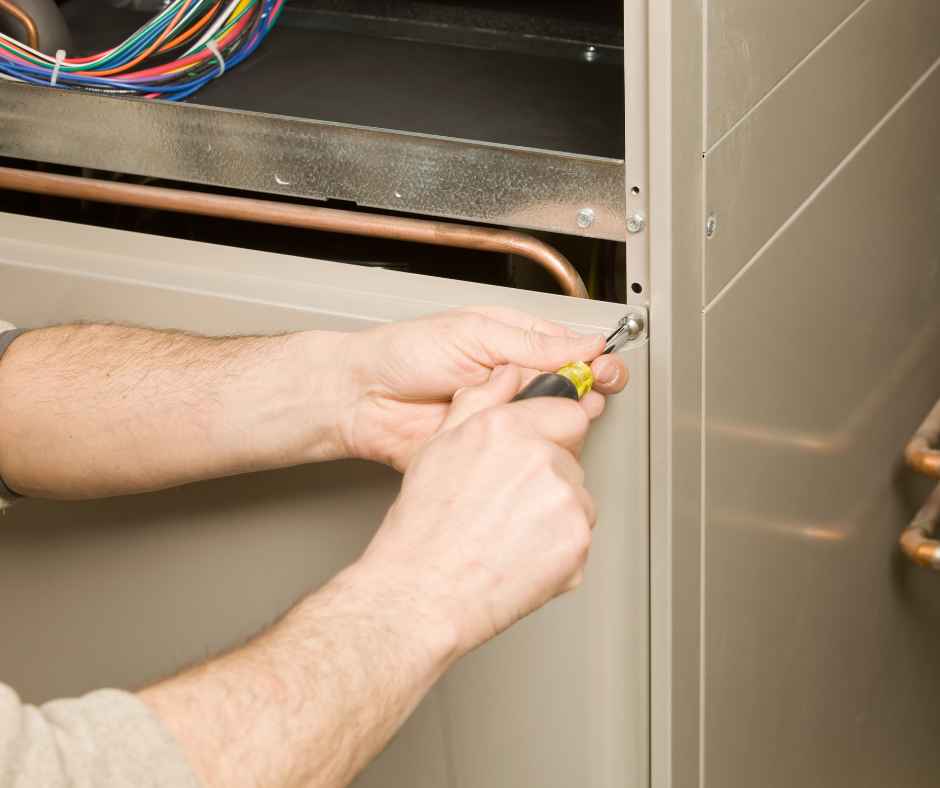
Once you’ve determined the appropriate furnace size for your home, the next step is furnace installation. It’s important to work with a professional for furnace installation to ensure that the unit is installed correctly and operates efficiently. An improperly installed furnace can lead to poor performance, frequent repairs, and even safety hazards such as carbon monoxide leaks.
At MillTown Plumbing, Heating, Cooling & Electrical, we specialize in both furnace installation and furnace replacement, helping homeowners choose the right size furnace to meet their heating needs. Our experienced technicians will assess your home, calculate the correct BTUs required, and recommend the best furnace for your budget and comfort preferences.
How Much Does Furnace Installation Cost?
The cost of installing a new house furnace varies depending on factors such as the size of the furnace, the complexity of the installation, and any necessary modifications to your existing HVAC system. The cost of a new furnace can vary widely due to the factors above, so the best way to get a price that’s right for you is to speak to one of our Comfort Advisors for a customized quote that meets your unique needs.
A new furnace is a significant investment, a properly sized and professionally installed unit can save you money in the long run by operating more efficiently and requiring fewer repairs.
Contact MillTown Plumbing, Heating, Cooling & Electrical for Furnace Installation and Replacement
Choosing the right size furnace is essential for maintaining a comfortable home and keeping energy bills under control. By calculating how many BTU you need based on your home’s square footage, insulation, and layout, you can find the perfect furnace to suit your needs. Whether you’re installing a new furnace or replacing an outdated unit, MillTown Plumbing, Heating, Cooling & Electrical is here to help.
Contact us today for expert furnace installation and replacement services. Our team will guide you through the process, ensuring that your home stays warm and comfortable throughout the colder months.
Recent News
Old Wiring vs. Modern Loads: When Does a Panel Upgrade Become a Safety Necessity in Middlesex County?
A panel upgrade becomes a safety necessity when an older Middlesex County home experiences frequent breaker trips, flickering lights, warm
A panel upgrade becomes a safety necessity when an older Middlesex County home experiences frequent breaker trips, flickering lights, warm
Hard Water & Tankless Systems: Why Massachusetts Mineral Buildup is Your Water Heater’s Worst Enemy
Tankless water heaters can be highly efficient, but mineral buildup can quietly reduce that performance over time. In Massachusetts homes,
Tankless water heaters can be highly efficient, but mineral buildup can quietly reduce that performance over time. In Massachusetts homes,
The Cost of Inefficiency: A Deep Dive Into SEER2 Ratings for Massachusetts Homeowners
SEER2 ratings matter because they show how efficiently an air conditioner or heat pump cools your home under updated testing
SEER2 ratings matter because they show how efficiently an air conditioner or heat pump cools your home under updated testing
How to Prepare Your Heating System for a Sudden New England Cold Snap
In New England, the weather can shift from a mild afternoon to a bone-chilling freeze in a matter of hours.
In New England, the weather can shift from a mild afternoon to a bone-chilling freeze in a matter of hours.
How to Lower Heating Bills Without Sacrificing Comfort in Massachusetts Homes
Surviving a Massachusetts winter requires more than just a heavy coat and a snow shovel. For homeowners across the state,
Surviving a Massachusetts winter requires more than just a heavy coat and a snow shovel. For homeowners across the state,

25 Plumbing Tips Every Massachusetts Homeowner Should Know
Keep your water flowing smoothly with advice from the experts at MillTown Plumbing, Heating, Cooling & Electrical When it comes
Keep your water flowing smoothly with advice from the experts at MillTown Plumbing, Heating, Cooling & Electrical When it comes
Common Winter HVAC Issues in Massachusetts Homes and When to Call for Service
Massachusetts winters bring freezing temperatures, heavy snowfall, and extended periods of cold weather that place constant strain on home heating
Massachusetts winters bring freezing temperatures, heavy snowfall, and extended periods of cold weather that place constant strain on home heating
Areas In Mass We Service
Acton, MA
Andover, MA
Arlington, MA
Ayer, MA
Bedford, MA
Berlin, MA
Billerica, MA
Bolton, MA
Boxborough, MA
Burlington, MA
Carlisle, MA
Chelmsford, MA
Clinton, MA
Concord, MA
Devens, MA
Dracut, MA
Dunstable, MA
Fitchburg, MA
Georgetown, MA
Groton, MA
Groveland, MA
Harvard, MA
Haverhill, MA
Hudson, MA
Lancaster, MA
Lawrence, MA
Leominster, MA
Lexington, MA
Lincoln, MA
Littleton, MA
Lowell, MA
Lunenburg, MA
Marlborough, MA
Maynard, MA
Methuen, MA
North Andover, MA
North Billerica, MA
North Chelmsford, MA
North Reading, MA
Pepperell, MA
Reading, MA
Shirley, MA
Stoneham, MA
Stow, MA
Sudbury, MA
Tewksbury, MA
Townsend, MA
Tyngsborough, MA
Wakefield, MA
Waltham, MA
Wayland, MA
West Groton, MA
Westford, MA
Weston, MA
Wilmington, MA
Woburn, MA
