★ Locally Trusted With 3193+ 5-Star Reviews ★

Back to Blog
Old Wiring vs. Modern Loads: When Does a Panel Upgrade Become a Safety Necessity in Middlesex County?
A panel upgrade becomes a safety necessity when an older Middlesex County home experiences frequent breaker trips, flickering lights, warm outlets, burning smells, a full panel, outdated wiring, or plans to add high-demand equipment such as EV chargers, heat pumps, hot tubs, or major appliances. Old wiring and modern electrical loads can create overheating, overloaded circuits, and fire risks when the panel can no longer distribute power safely.
Older homes across Middlesex County often have strong bones, established neighborhoods, and plenty of character. But behind the walls, many electrical systems were designed for a different era. A home that once powered basic lighting, a refrigerator, and a few appliances may now need to support HVAC equipment, home offices, smart devices, entertainment systems, EV chargers, and larger kitchen appliances.
In this guide, we will explain when old wiring and modern electrical loads become a safety concern, how to tell when your panel may be overloaded, and when to call MillTown Plumbing, Heating, Cooling & Electrical for an electrical panel inspection or upgrade.
Why Do Older Middlesex County Homes Struggle With Modern Electrical Loads?
Modern homes use more electricity than older electrical systems were built to handle. Even if your panel still works, it may be operating near its limits.
Older homes may struggle because of:
- Smaller electrical service capacity
- Outdated breaker panels
- Aging wiring
- Limited dedicated circuits
- Older outlets and switches
- DIY electrical additions from past owners
- Heavy appliance use
- Home office equipment
- HVAC upgrades
- EV charging needs
- Finished basements or additions
- Smart home devices and electronics
The issue is not just convenience. When circuits are overloaded or connections weaken, heat can build up inside wiring, outlets, breakers, and the panel.
What Does an Electrical Panel Do?
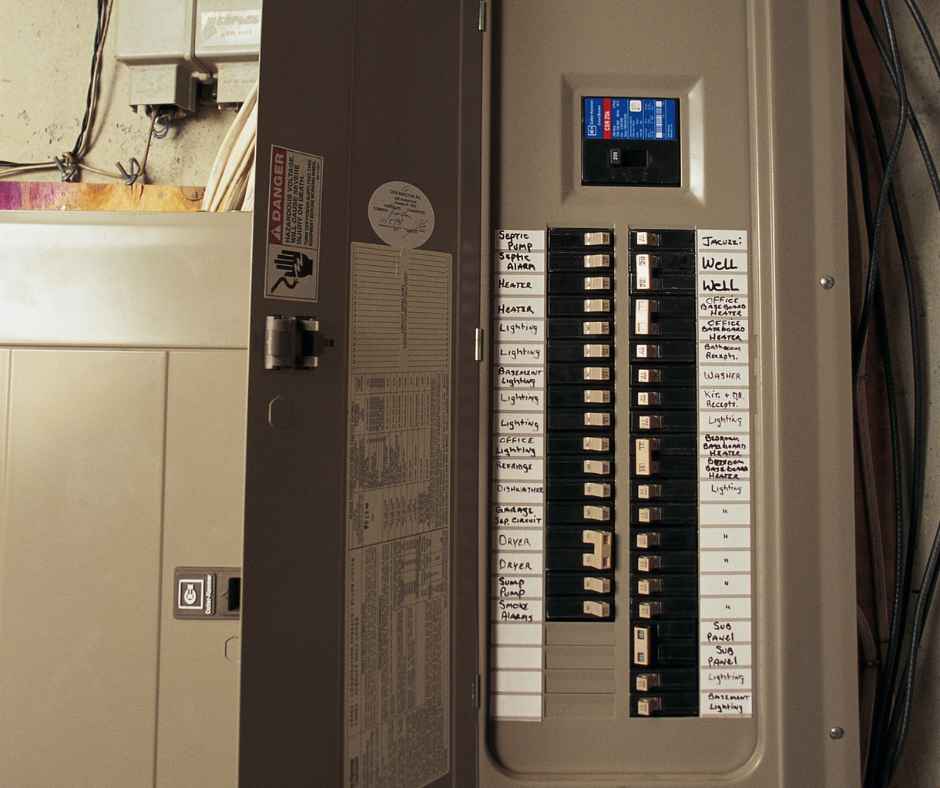
Your electrical panel is the distribution center for power in your home. It receives electricity from the utility and sends it through circuits to different areas and appliances. Breakers are designed to shut off power when a circuit is overloaded or unsafe.
A properly working panel helps protect against:
- Overloaded circuits
- Short circuits
- Electrical overheating
- Damaged wiring
- Unsafe power distribution
- Fire hazards
- Equipment damage
When the panel is outdated, damaged, undersized, or overloaded, it may not protect the home as effectively as it should.
What Is the Difference Between Old Wiring and an Old Panel?
Old wiring and an old panel are related, but they are not the same problem.
Old wiring refers to the conductors, connections, outlets, switches, and circuits inside the walls and throughout the home. An old panel refers to the main breaker box that controls and distributes electricity.
A home may have:
- Old wiring with a newer panel
- A newer wiring update with an old panel
- Both old wiring and an outdated panel
- Mixed wiring from additions and remodels
- Modern loads added to older circuits
That is why an inspection matters. Replacing the panel may not resolve every wiring issue, and rewiring may not be sufficient if the home also needs additional capacity.
When Does an Electrical Panel Upgrade Become Necessary?
A panel upgrade becomes necessary when the existing panel can no longer safely support the home’s electrical needs. This can happen because the panel is too old, too small, damaged, full, or incompatible with modern safety requirements.
A panel upgrade may be needed if:
- Breakers trip frequently
- Lights flicker or dim
- Outlets feel warm
- The panel feels hot
- You smell burning near outlets or the panel
- Breakers will not reset
- The panel is rusty or corroded
- You still have a fuse box
- The panel is out of breaker space
- You rely on extension cords often
- You are adding high-demand equipment
- You are remodeling or adding rooms
- The home has outdated wiring concerns
If the panel is showing heat, odor, rust, or repeated breaker trips, schedule an inspection as soon as possible.
Why Are Frequent Breaker Trips a Warning Sign?
A breaker that trips once may be doing its job. A breaker that trips repeatedly is a warning.
Repeated breaker trips may point to:
- Overloaded circuits
- Damaged wiring
- Loose connections
- Short circuits
- Ground faults
- Failing breakers
- Too many devices on one circuit
- An undersized panel
- A major appliance drawing too much power
Do not keep resetting the same breaker without finding the cause. The breaker is shutting off power because the circuit may be unsafe.
Why Do Flickering Lights Matter in Older Homes?
Flickering lights can have simple causes, such as a loose bulb. But flickering across multiple rooms or dimming when appliances start up may indicate a larger electrical issue.
Flickering lights may be caused by:
- Loose wiring connections
- Overloaded circuits
- Panel problems
- Undersized service
- Aging wiring
- Faulty breakers
- Large appliances drawing power
- Utility-side issues
If the lights dim when the HVAC system, microwave, dryer, or other appliance turns on, the electrical system may need to be evaluated.
Why Are Warm Outlets or Burning Smells Urgent?
Warm outlets, scorch marks, buzzing sounds, and burning smells are serious warning signs. They can indicate heat buildup, loose connections, arcing, or overloaded wiring.
Call an electrician quickly if you notice:
- Outlets feel warm
- Switch plates are hot
- Burning plastic smell
- Buzzing or crackling sounds
- Scorch marks near outlets
- Smoke or discoloration
- Plugs feel hot
- A breaker smells burnt
- The panel cover feels warm
Stop using the affected outlet or circuit until it has been inspected.
What Modern Upgrades Often Require More Panel Capacity?
Many popular home upgrades require dedicated circuits or more electrical capacity. If your panel is already full or your service is undersized, a panel upgrade may be needed before installation.
High-demand upgrades include:
- EV chargers
- Heat pumps
- Central AC replacement
- Electric water heaters
- Induction ranges
- Electric dryers
- Hot tubs
- Saunas
- Pool equipment
- Home additions
- Finished basements
- Garage workshops
- Outdoor kitchens
- Backup generators or transfer switches
- Whole-home surge protection
- Solar or battery storage readiness
Before adding major equipment, have the panel inspected. Adding load without confirming capacity can create safety risks.
Why Is a Full Electrical Panel a Problem?
A full panel does not always mean the home is unsafe, but it does limit options. If there is no room for additional circuits, past owners may have used shortcuts that are not ideal.
A full panel may lead to:
- Overloaded existing circuits
- Too many rooms on one circuit
- Heavy reliance on extension cords
- Improper tandem breaker use
- Confusing or inaccurate labeling
- Unsafe DIY additions
- Limited ability to add appliances
- Remodel delays
A panel upgrade can improve circuit organization and accommodate modern electrical needs.
How Does Old Wiring Increase Electrical Risk?
Older wiring may become brittle, loose, overloaded, or outdated for modern usage. Some older homes may also lack proper grounding or modern protection in key areas.
Old wiring can increase risk because of:
- Worn insulation
- Loose connections
- Undersized circuits
- Missing grounding
- Outdated outlets
- Old junction boxes
- Past DIY modifications
- Lack of GFCI protection
- Lack of AFCI protection
- Circuits carrying more load than intended
A panel upgrade can improve power distribution, but the wiring condition still needs to be checked. In some homes, panel work and circuit upgrades may need to happen together.
What Role Do GFCI and AFCI Protections Play?
Modern electrical safety depends on more than breaker capacity. GFCI and AFCI protection help reduce specific risks.
GFCI protection helps reduce shock risk in areas where water may be present, including:
- Bathrooms
- Kitchens
- Garages
- Basements
- Laundry areas
- Outdoor outlets
AFCI protection helps detect dangerous arcing conditions that may occur in damaged or aging wiring.
Older homes may not have enough modern protection. An electrical inspection can identify where updates are recommended or required during a project.
Should Middlesex County Homeowners Upgrade the Panel Before Remodeling?
Yes, the panel should be evaluated before major remodeling. Kitchens, bathrooms, basements, additions, and garages often require new circuits and modern electrical protection.
Schedule an inspection before projects such as:
- Kitchen remodels
- Bathroom remodels
- Basement finishing
- Home additions
- Garage conversions
- HVAC replacement
- EV charger installation
- Laundry room upgrades
- Outdoor living projects
Planning ahead can prevent delays, failed inspections, overloaded circuits, and expensive last-minute changes.
Is Panel Replacement the Same as a Service Upgrade?
Not always. Panel replacement and service upgrade are related, but different. Panel replacement means replacing the breaker panel itself. The home may keep the same service capacity. A service upgrade means increasing the amount of power delivered to the home. This may involve utility coordination, meter updates, service conductors, grounding improvements, and a new panel.
You may need to replace the panel if it is old, damaged, or full. You may need a service upgrade if the home requires more total power to support modern loads. Some homes need both.
What Happens During an Electrical Panel Inspection?
A professional panel inspection helps determine whether the issue is age, condition, capacity, wiring, or load demand.
An inspection may include:
- Checking panel age and condition
- Looking for rust or corrosion
- Inspecting breakers
- Checking for heat damage
- Reviewing circuit labeling
- Looking for overcrowding
- Testing for loose connections
- Reviewing service capacity
- Discussing planned upgrades
- Checking grounding and bonding
- Identifying safety concerns
- Recommending repair, replacement, or upgrade
This gives homeowners a clear path forward rather than leaving them to guess.
When Is Repair Enough Instead of a Panel Upgrade?
Not every electrical issue requires a full panel upgrade. Sometimes a targeted repair is enough.
Panel repair may make sense if:
- The panel is modern and in good condition
- One breaker is failing
- One circuit has a known issue
- Capacity is still adequate
- There is no heat or corrosion damage
- The home is not adding major loads
- Wiring is otherwise safe
A panel upgrade may be better if problems are widespread, the panel is outdated, or the home needs more capacity.
When Is a Panel Upgrade the Safer Long-Term Choice?
A panel upgrade becomes the safer long-term choice when the existing system cannot reliably support the home.
Upgrade may be the right move if:
- The panel is outdated
- Breakers trip often
- The home has modern load demands
- The panel is full
- There are signs of overheating
- The home still uses fuses
- You are adding EV charging or HVAC equipment
- Remodel plans require more circuits
- Breakers are hard to replace
- The system has known safety concerns
A new panel can improve safety, reliability, capacity, and future flexibility.
Make Your Electrical Panel Ready for the Way You Live Now
Old wiring and modern electrical loads are a risky combination when your panel can no longer keep up. Frequent breaker trips, flickering lights, warm outlets, burning smells, full panels, and planned upgrades are all signs that your Middlesex County home may need professional attention.
Contact MillTown Plumbing, Heating, Cooling & Electrical today to schedule an electrical panel inspection. Our team can evaluate your system, explain your options, and help you decide whether panel repair, panel replacement, or a full service upgrade is the safest choice for your home.
Recent News
Hard Water & Tankless Systems: Why Massachusetts Mineral Buildup is Your Water Heater’s Worst Enemy
Tankless water heaters can be highly efficient, but mineral buildup can quietly reduce that performance over time. In Massachusetts homes,
Tankless water heaters can be highly efficient, but mineral buildup can quietly reduce that performance over time. In Massachusetts homes,
The Cost of Inefficiency: A Deep Dive Into SEER2 Ratings for Massachusetts Homeowners
SEER2 ratings matter because they show how efficiently an air conditioner or heat pump cools your home under updated testing
SEER2 ratings matter because they show how efficiently an air conditioner or heat pump cools your home under updated testing
How to Prepare Your Heating System for a Sudden New England Cold Snap
In New England, the weather can shift from a mild afternoon to a bone-chilling freeze in a matter of hours.
In New England, the weather can shift from a mild afternoon to a bone-chilling freeze in a matter of hours.
How to Lower Heating Bills Without Sacrificing Comfort in Massachusetts Homes
Surviving a Massachusetts winter requires more than just a heavy coat and a snow shovel. For homeowners across the state,
Surviving a Massachusetts winter requires more than just a heavy coat and a snow shovel. For homeowners across the state,

25 Plumbing Tips Every Massachusetts Homeowner Should Know
Keep your water flowing smoothly with advice from the experts at MillTown Plumbing, Heating, Cooling & Electrical When it comes
Keep your water flowing smoothly with advice from the experts at MillTown Plumbing, Heating, Cooling & Electrical When it comes
Common Winter HVAC Issues in Massachusetts Homes and When to Call for Service
Massachusetts winters bring freezing temperatures, heavy snowfall, and extended periods of cold weather that place constant strain on home heating
Massachusetts winters bring freezing temperatures, heavy snowfall, and extended periods of cold weather that place constant strain on home heating
Why Professional Drain Cleaning Is Essential Before Holiday Gatherings
The holidays are all about gathering with family, cooking big meals, and making lasting memories. But before guests arrive and
The holidays are all about gathering with family, cooking big meals, and making lasting memories. But before guests arrive and
Areas In Mass We Service
Acton, MA
Andover, MA
Arlington, MA
Ayer, MA
Bedford, MA
Berlin, MA
Billerica, MA
Bolton, MA
Boxborough, MA
Burlington, MA
Carlisle, MA
Chelmsford, MA
Clinton, MA
Concord, MA
Devens, MA
Dracut, MA
Dunstable, MA
Fitchburg, MA
Georgetown, MA
Groton, MA
Groveland, MA
Harvard, MA
Haverhill, MA
Hudson, MA
Lancaster, MA
Lawrence, MA
Leominster, MA
Lexington, MA
Lincoln, MA
Littleton, MA
Lowell, MA
Lunenburg, MA
Marlborough, MA
Maynard, MA
Methuen, MA
North Andover, MA
North Billerica, MA
North Chelmsford, MA
North Reading, MA
Pepperell, MA
Reading, MA
Shirley, MA
Stoneham, MA
Stow, MA
Sudbury, MA
Tewksbury, MA
Townsend, MA
Tyngsborough, MA
Wakefield, MA
Waltham, MA
Wayland, MA
West Groton, MA
Westford, MA
Weston, MA
Wilmington, MA
Woburn, MA
