★ Locally Trusted With 3140+ 5-Star Reviews ★

Back to Blog
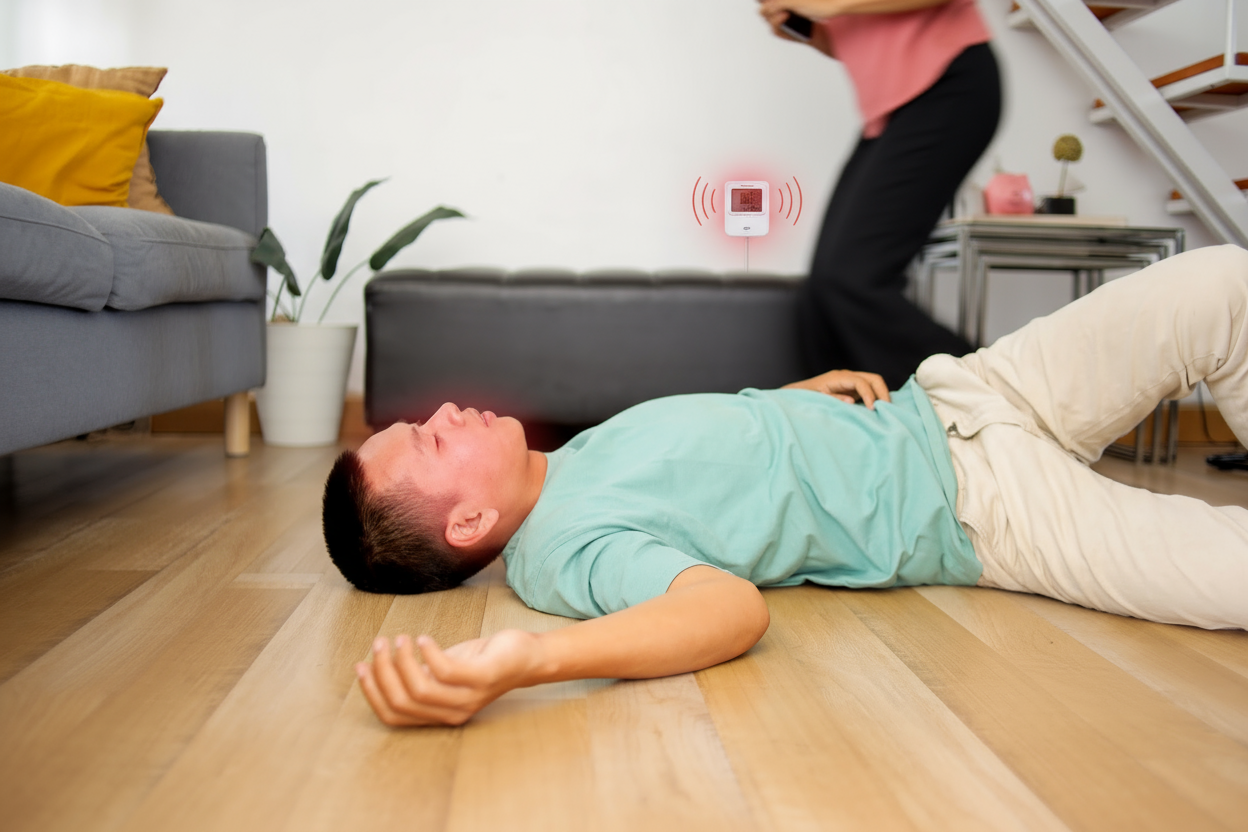
Condemned Furnace? Red-Tagging Explained and What It Means for You
“Condemned” or Red-Tagged Furnace — It’s Not a Scare Tactic
Think your furnace is fine as long as it’s running? Not always. In fact, it could actually be dangerous.
Cold weather is on the way, and now more than ever, furnace safety matters. Every year, more than 400 Americans die from accidental carbon monoxide poisoning—and over 100,000 end up in the emergency room.
Closer to home, just last winter a Massachusetts family of four—two parents and their daughters—tragically died in a New Hampshire vacation home due to a leaking propane heater. Their home had no working CO detectors.
So when a heating contractor or your gas company tags your furnace as unsafe, it’s easy to assume you’re being pressured into buying a new system you don’t need. But here’s the truth: in Massachusetts, technicians don’t have a choice. State law requires property owners to keep fuel-burning appliances in safe working order, and technicians are legally and ethically obligated to shut down equipment that poses a risk.
That’s why a condemned or “red-tagged” furnace isn’t about pressure or sales—it’s about preventing a silent, deadly danger. And if your furnace is older, it’s more likely to fail—and potentially more dangerous.

The danger at the center of this? Carbon monoxide.
Condemning a furnace protects you, your family, and your home from an invisible, potentially fatal threat.
Why Heat Exchangers Crack and Lead to a Red-Tagged Furnace
At the heart of your furnace is the heat exchanger—a set of metal chambers that separate flames from the air you breathe. Think of it as the firewall that keeps combustion gases out of your living space. When intact, those gases—including deadly carbon monoxide—exit safely through your flue.
But over time, metal fatigues. Constant heating and cooling cycles cause expansion and contraction. Add in corrosion, dirt buildup, poor maintenance, or even an oversized or undersized system, and cracks can form. This is when they become dangerous.
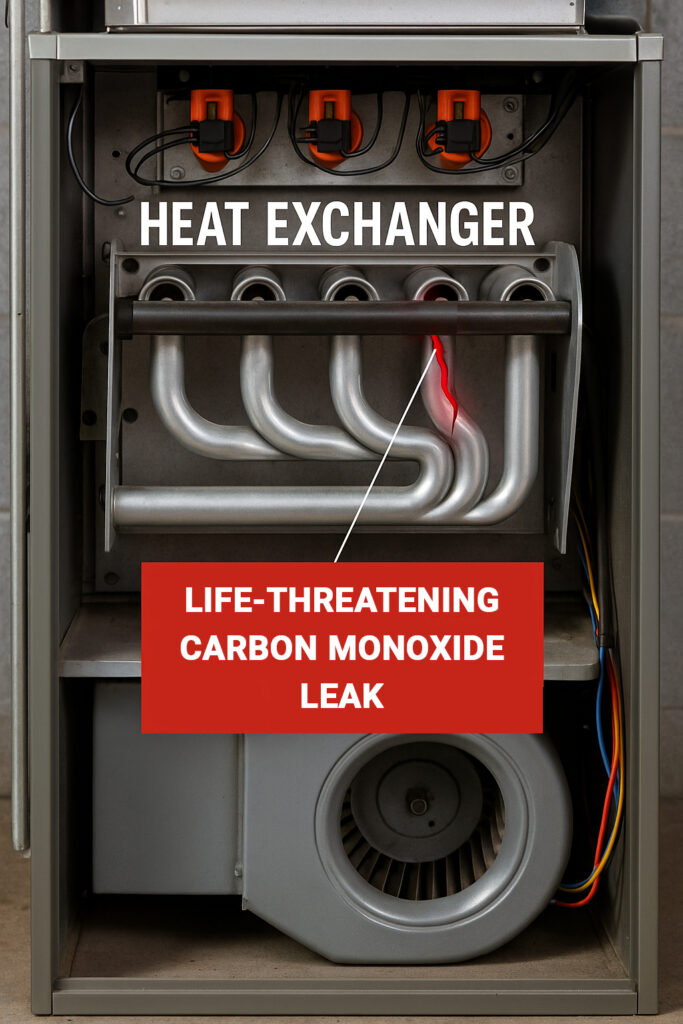
Once a heat exchanger cracks, combustion gases can leak into your home’s air supply. The blower fan can also disrupt the flame, creating incomplete combustion that produces even more CO. Rust, soot, or water damage around the furnace often make the problem worse.
Carbon Monoxide – The Silent Threat
Carbon monoxide (CO) is odorless, colorless, and tasteless. Most people never realize they’re being exposed until they feel sick. At first, symptoms often mimic the flu—headaches, fatigue, dizziness, nausea, and shortness of breath. As exposure levels rise, the symptoms grow more severe—mental confusion, vomiting, and loss of muscle control can occur. Prolonged or high-level exposure can lead to unconsciousness and death.
Because the signs are nonspecific, many people don’t recognize the danger. They may stay in the contaminated building instead of seeking fresh air, which only increases the risk. That’s why carbon monoxide is often called the “silent killer.”
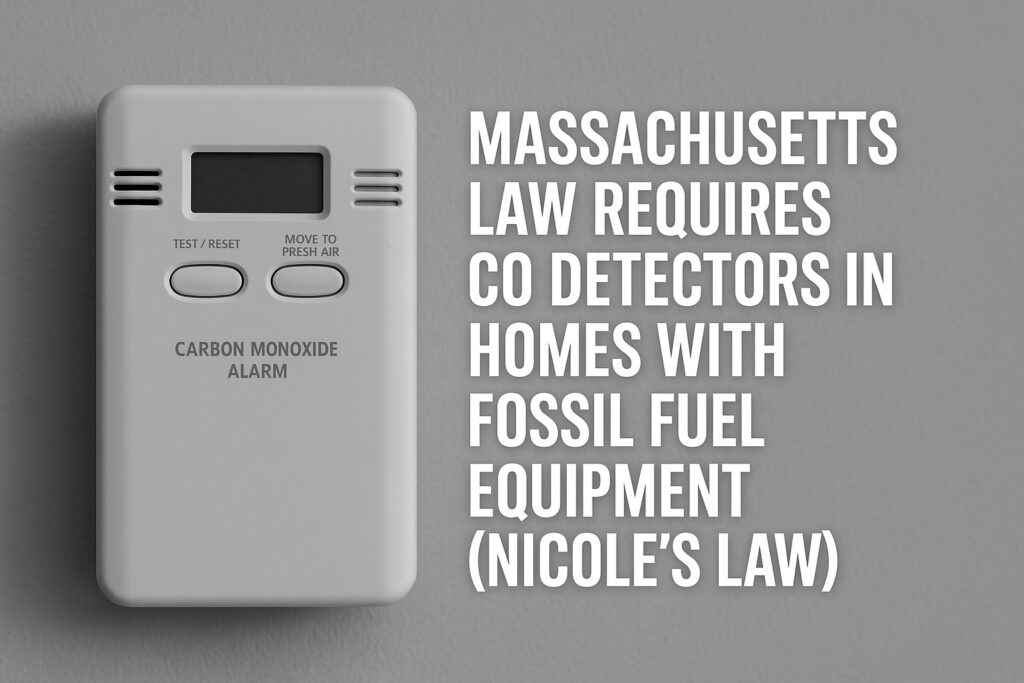
Massachusetts’ Nicole’s Law requires carbon monoxide alarms in any home with fossil-fuel equipment or an enclosed garage. These alarms are essential because they provide the early warning your body can’t. That said, CO detectors may or may not go off if a heat exchanger is cracked and are not always reliable indicators – your safest bet is to get your system inspected annually by a licensed pro.
Why “Red-Tagging” Protects You
When a technician “red-tags” your furnace, they’re placing a visible warning label on the equipment and shutting it down so it can’t be restarted. In many cases, utilities won’t restore gas service until the furnace has been repaired or replaced.
And while it may feel like an inconvenience, that red tag is actually your lifeline. It stops carbon monoxide exposure before it harms you. It also prevents you from being held legally responsible if someone is injured. And it forces a solution, because cracked heat exchangers cannot be safely patched.
There are also clear signs that your furnace may be failing:
- Flames that flicker yellow instead of steady blue can point to combustion problems.
- Soot or corrosion around the unit suggest gases are escaping.
- Some furnaces will even shut themselves down when unsafe conditions are detected, causing rapid cycling or a complete loss of airflow.
- Strange noises, chemical-like odors, rust, or water pooling around the furnace are also warning signs.
And if a CO detector alarm goes off, treat it as an emergency: evacuate immediately and call 911.
Your Options When Your Furnace Is Condemned
Hearing that your furnace has been condemned can feel overwhelming, but you do have options.
First, ask for proof. A reputable contractor will use a mirror, camera, or combustion analysis to show you the crack. When it comes to fixing the problem, the decision often comes down to repair versus replacement.
If your furnace is still under warranty and the heat exchanger part is available, repair might be worth considering. But because the heat exchanger is the core of the system, labor costs may approach the price of a whole new unit.
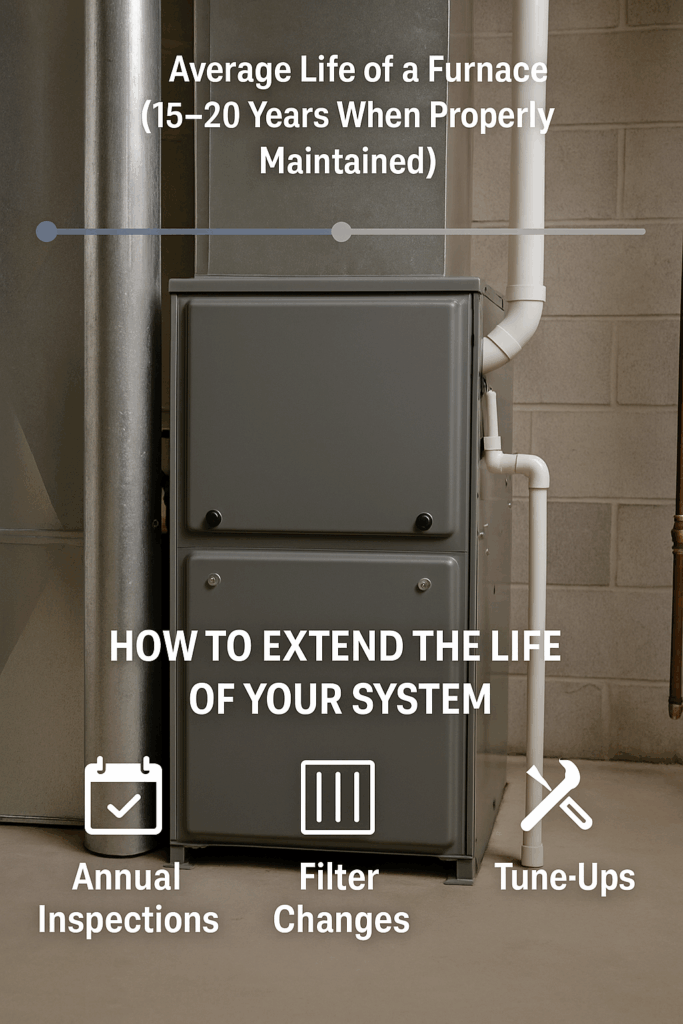
Most heat exchangers come with a 20-year to lifetime warranty. However, it’s worth noting that the rest of the HVAC system is often the same age, and if the system is already beyond its expected life span (typically 10–20 years), other components may start failing within a year or two—even if the heat exchanger itself is under warranty.
For older furnaces, replacement is usually the safer, more cost-effective choice. A new, high-efficiency furnace can save on energy bills and may even qualify for rebates or incentives.
Finally, make sure you document everything. Keep inspection reports, estimates, and photos of the damaged part. This paperwork can protect you in disputes with utilities or insurance providers.
Protect Your Family and Your Home
Don’t wait until you hear the words “condemned” to think about furnace safety. Prevention is always more affordable and less stressful than emergency replacement.
Here’s how to stay ahead:
- Schedule annual system checks. A professional inspection can spot cracks, corrosion, and CO leaks before they become dangerous.
- Change filters regularly. Every 1–3 months keeps airflow unrestricted and your system from overheating.
- Maintain proper ventilation. Keep vents clear and chimneys clean to prevent backdrafting.
- Test your CO alarms monthly. Replace batteries twice a year and replace the units every five years, or when recommended by the manufacturer.
- Keep flammables away. Never use ovens or stoves for heat and never run vehicles or generators in attached garages.
CO Poisoning Symptoms: What to Watch For
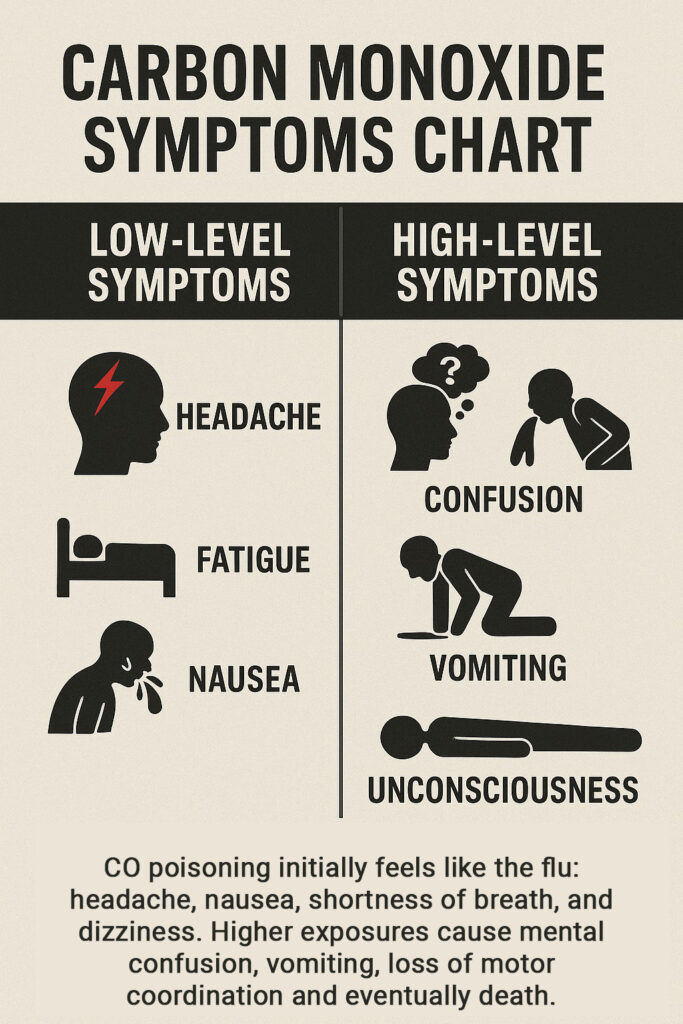
Carbon monoxide poisoning can feel like the flu, but the symptoms grow more serious with continued exposure. If you notice any of these signs while using fuel-burning equipment, leave immediately and call 911:
- Headache
- Fatigue or weakness
- Dizziness or lightheadedness
- Nausea or upset stomach
- Shortness of breath
- Mental confusion
- Vomiting
- Loss of muscle control
- Unconsciousness & death
Remember: CO is invisible and odorless. Your carbon monoxide alarm is often your only early warning.
A condemned furnace isn’t a scam. It’s a warning sign you can’t afford to ignore. Because at the end of the day, nothing matters more than keeping your family safe—and at MillTown, that’s exactly what we’re here for.
Schedule your furnace system check or replacement consultation today.
Recent News
Old Wiring vs. Modern Loads: When Does a Panel Upgrade Become a Safety Necessity in Middlesex County?
A panel upgrade becomes a safety necessity when an older Middlesex County home experiences frequent breaker trips, flickering lights, warm
A panel upgrade becomes a safety necessity when an older Middlesex County home experiences frequent breaker trips, flickering lights, warm
Hard Water & Tankless Systems: Why Massachusetts Mineral Buildup is Your Water Heater’s Worst Enemy
Tankless water heaters can be highly efficient, but mineral buildup can quietly reduce that performance over time. In Massachusetts homes,
Tankless water heaters can be highly efficient, but mineral buildup can quietly reduce that performance over time. In Massachusetts homes,
The Cost of Inefficiency: A Deep Dive Into SEER2 Ratings for Massachusetts Homeowners
SEER2 ratings matter because they show how efficiently an air conditioner or heat pump cools your home under updated testing
SEER2 ratings matter because they show how efficiently an air conditioner or heat pump cools your home under updated testing
How to Prepare Your Heating System for a Sudden New England Cold Snap
In New England, the weather can shift from a mild afternoon to a bone-chilling freeze in a matter of hours.
In New England, the weather can shift from a mild afternoon to a bone-chilling freeze in a matter of hours.
How to Lower Heating Bills Without Sacrificing Comfort in Massachusetts Homes
Surviving a Massachusetts winter requires more than just a heavy coat and a snow shovel. For homeowners across the state,
Surviving a Massachusetts winter requires more than just a heavy coat and a snow shovel. For homeowners across the state,

25 Plumbing Tips Every Massachusetts Homeowner Should Know
Keep your water flowing smoothly with advice from the experts at MillTown Plumbing, Heating, Cooling & Electrical When it comes
Keep your water flowing smoothly with advice from the experts at MillTown Plumbing, Heating, Cooling & Electrical When it comes
Common Winter HVAC Issues in Massachusetts Homes and When to Call for Service
Massachusetts winters bring freezing temperatures, heavy snowfall, and extended periods of cold weather that place constant strain on home heating
Massachusetts winters bring freezing temperatures, heavy snowfall, and extended periods of cold weather that place constant strain on home heating
Areas In Mass We Service
Acton, MA
Andover, MA
Arlington, MA
Ayer, MA
Bedford, MA
Berlin, MA
Billerica, MA
Bolton, MA
Boxborough, MA
Burlington, MA
Carlisle, MA
Chelmsford, MA
Clinton, MA
Concord, MA
Devens, MA
Dracut, MA
Dunstable, MA
Fitchburg, MA
Georgetown, MA
Groton, MA
Groveland, MA
Harvard, MA
Haverhill, MA
Hudson, MA
Lancaster, MA
Lawrence, MA
Leominster, MA
Lexington, MA
Lincoln, MA
Littleton, MA
Lowell, MA
Lunenburg, MA
Marlborough, MA
Maynard, MA
Methuen, MA
North Andover, MA
North Billerica, MA
North Chelmsford, MA
North Reading, MA
Pepperell, MA
Reading, MA
Shirley, MA
Stoneham, MA
Stow, MA
Sudbury, MA
Tewksbury, MA
Townsend, MA
Tyngsborough, MA
Wakefield, MA
Waltham, MA
Wayland, MA
West Groton, MA
Westford, MA
Weston, MA
Wilmington, MA
Woburn, MA
