★ Locally Trusted With 3193+ 5-Star Reviews ★

Back to Blog
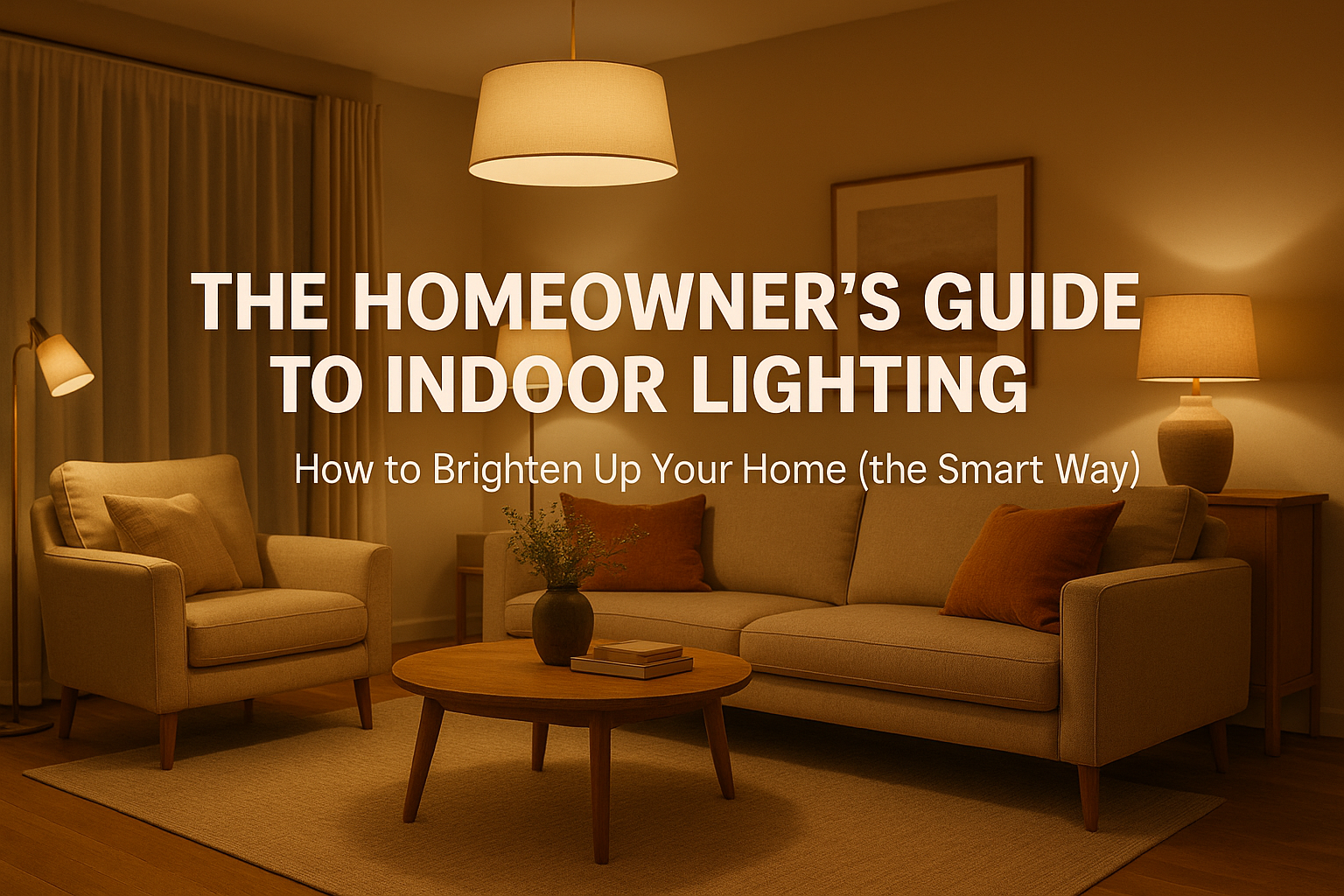
The Homeowner’s Guide to Indoor Lighting
How to Brighten Up Your Home (the Smart Way)
The ceiling light in the hallway buzzes every time you turn it on. Your kitchen feels a little too dim during dinner prep. And that one corner in your living room? Completely useless after sunset.
Sound familiar? You’re not alone.
For many homeowners, indoor lighting is one of those “we’ll get to it someday” projects, but lighting has the power to shape how your home feels, how it functions, and even how much energy you use. Whether you’re renovating, upgrading, or just trying to make things a little cozier, smart lighting choices can make all the difference to your home comfort.
In this guide, we walk you through everything you need to know to light your home like a pro—from fixing common lighting problems to choosing the right bulbs and exploring smart tech to add comfort, convenience and control.
Topics
- Why Indoor Lighting Matters
- Common Indoor Lighting Issues (And How to Fix Them)
- Types of Indoor Lighting (And Where to Use Them)
- Understanding Color Temperatures (And Where They Shine)
- Choosing the Right Bulbs (It’s Easier Than You Think)
- Smarter Lighting: Tech to Add Comfort, Convenience, and Control
- Lighting Inspiration Gallery
- When to Call the Pros
Why Indoor Lighting Matters
You might not think about your home’s indoor lighting every day, but it affects everything from your mood to your electric bill.
Great interior lighting can transform your home by:
💡 Making small spaces feel bigger
💡 Improving productivity in workspaces
💡 Reducing eye strain and fatigue
💡 Highlighting the best features of your home
💡 Creating ambiance and warmth
💡 Improving safety (especially on stairs or in hallways)
Poor indoor lighting, on the other hand, can make your home feel cold, dim, cluttered, or even unsafe.
Types of Indoor Lighting (And Where to Use Them)
Transformative indoor lighting isn’t just about flipping a switch. It’s about layering the right kinds of light in the right places to match how you live.
A well-lit home uses a combination of three main lighting types. Understanding these can help you create balance and purpose in each room.
Whether you’re brightening up a dark hallway or setting the mood in the living room, the goal is to combine functionality, style, and comfort in every space. Here’s how.

1. Ambient Lighting (General Illumination)
The foundation of a room’s lighting—soft, comfortable, and even, is usually provided by overhead lights.
Examples:
- Ceiling-mounted fixtures
- Recessed lights
- Chandeliers
- Track lighting
Best for: Living rooms, bedrooms, hallways, general areas.
2. Task Lighting (Focused Work Areas)
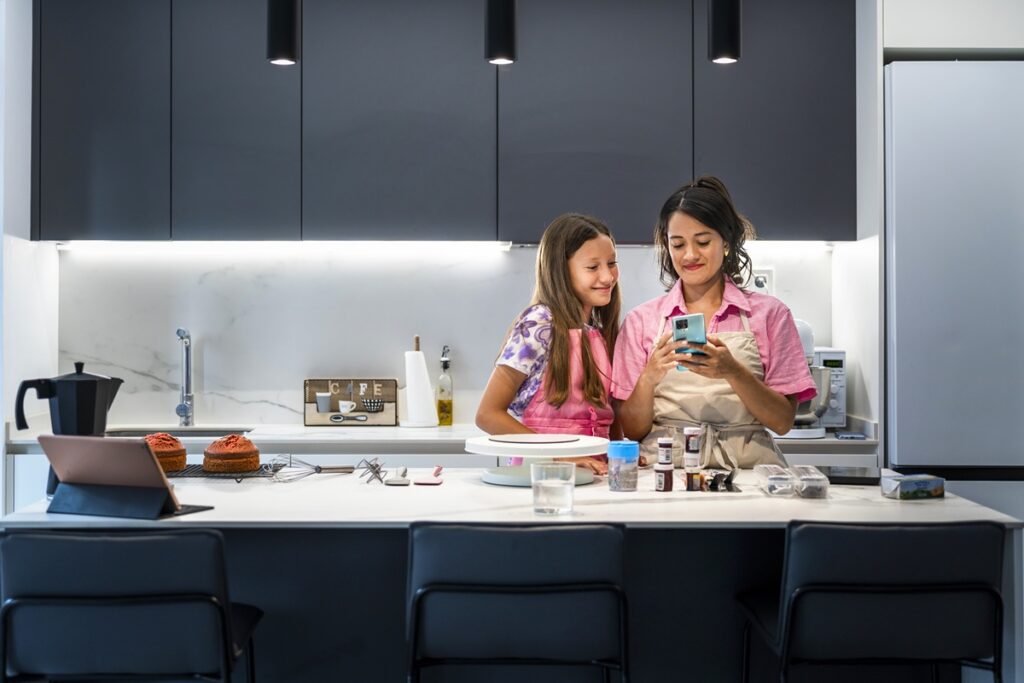
Focused light helps you get things done, like reading, cooking, or working.
Examples:
- Under-cabinet kitchen lights
- Desk lamps
- Vanity lights
- Pendant lights over counters
Best for: Kitchens, offices, bathrooms.
3. Accent Lighting (For Drama & Detail)
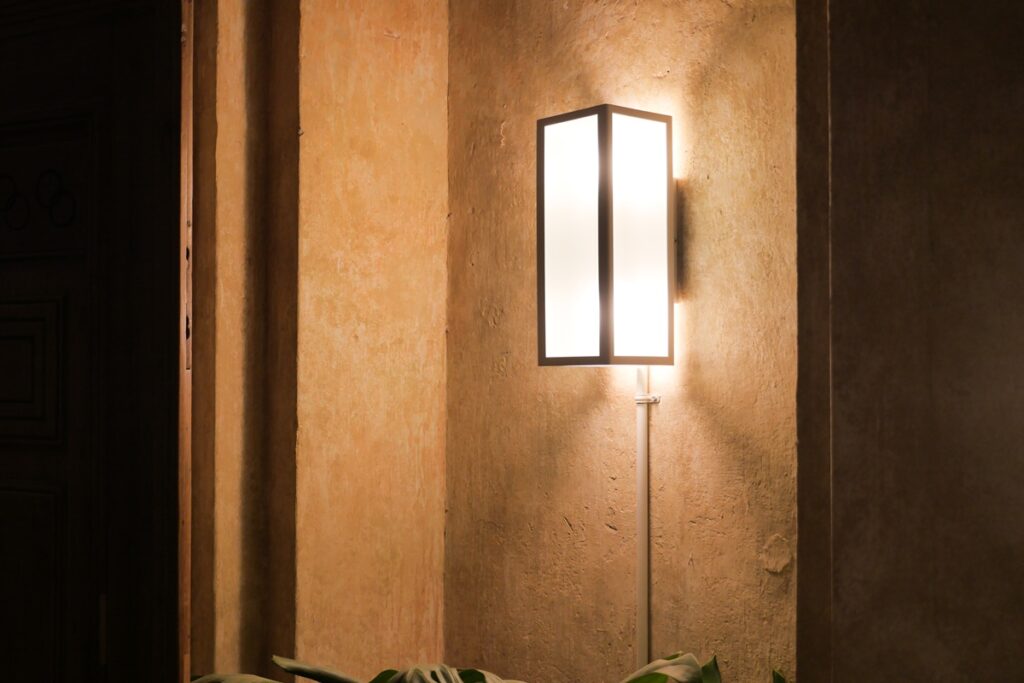
Used to highlight features like artwork, plants, or architectural details. Adds depth and interest.
Examples:
- Wall sconces
- Recessed spotlights
- LED strips
- Picture lights
Best for: Living rooms, staircases, hallways, libraries, bonus rooms.
11 Common Indoor Lighting Issues (And How to Fix Them)
Most homeowners don’t realize they have a lighting problem—they just feel like something’s “off.”
Wondering if it’s time to upgrade your lighting?
Here are ten telltale signs:
#1 – Your Rooms Feel Gloomy
Dark corners or uneven lighting are often caused by a lack of ambient or task lighting, and can make a space feel dreary, even with the lights on.
Fix: Add ceiling lights, floor lamps, or track lighting. Upgrade to energy-efficient LED fixtures or add more layers of lighting (task + ambient + accent).
#2 – Harsh Overhead Lights
If your lighting is too bright, it can make a room feel sterile.
Fix: Soften with dimmers or layer with table/floor lamps.
#3 – Old, Flickering, or Buzzing Fixtures
These aren’t just annoying—they could be signs of outdated wiring and potential safety hazards
Fix: Replace older fixtures and have an electrician inspect connections.
#4 – Poor Color Temperature
If a room feels off—too sterile, too moody, or just uncomfortable—the issue might be your bulb’s color temperature. The wrong tone of light can completely change the vibe of a space.
Fix: Swap bulbs to better match the room’s use. Warm tones for living spaces, cooler tones for task areas.
#5 – Rooms That Feel Small or Dull
Poor lighting can shrink your space.
Fix: Use uplighting or wall-mounted fixtures to brighten walls and ceilings.
#6 – Too Few Outlets or Switches
If you’re constantly relying on extension cords or walking across the room to turn on a light, your current setup probably isn’t working for you.
Fix: Install additional switches, smart controls, or motion-activated lighting for better control.
#7 – Lights That Trip Your Breaker
Frequent breaker trips are more than just annoying—they’re often a sign that something’s wrong with your wiring or electrical load.
Fix: If a particular fixture or circuit causes your breaker to trip repeatedly, it may be overloaded or have a short. This is a safety hazard—don’t ignore it. Call a pro to inspect your electrical system.
#8 – Overheated Light Fixtures or Burned Sockets
If your light fixture feels hot to the touch or shows signs of scorching, it’s time to investigate.
Fix: This could indicate bulbs with higher wattage than your fixture is rated for—or wiring that’s degraded. Switch to lower wattage LEDs and have the fixture evaluated by a licensed electrician.
#9 – Switches or Dimmers That Feel Hot
Notice your light switch or dimmer heating up more than usual? That’s a red flag worth paying attention to.
Fix: A warm dimmer may be normal, but if it’s hot to the touch, it could be overloaded. Consider upgrading to a model rated for your total wattage, installing a new circuit, or better yet, contact an electrician.
#10 – Eye Strain or Headaches from Harsh Lighting

Harsh shadows in work areas are a common issue. Bright, cold light can lead to squinting, while inconsistent lighting temperatures between rooms can throw off your visual comfort and cause fatigue.
Fix: Adjust task light placement to reduce glare. Swap bulbs for a warmer color temperature or use diffusers to soften harsh light. Consistent, well-layered lighting can help reduce eye strain and make your home more comfortable.
#11 – You Haven’t Upgraded Lighting in 10+ Years
Outdated fixtures or frequent bulb burnouts are signs that it’s time for a home indoor lighting upgrade. Technology has come a long way, and old lighting can increase your energy costs, while old switches and a lack of smart controls impact convenience and quality of life.
Fix: Upgrade to energy-efficient LED fixtures. Replace old switches with smart dimmers or motion sensors
Understanding Color Temperatures (And Where They Shine)
Lighting isn’t just about brightness—it’s about vibe. The color temperature of your bulbs plays a huge role in how a room feels, functions, and flows. Here’s how to match the right glow to the right space in your home:
When you’re choosing bulbs, brightness isn’t the only thing that matters—color temperature plays a huge role in how your space will feel.
Choosing the right temperature isn’t just about style either. It helps reduce eye strain, improve productivity, and even enhance your mood depending on your space and its function.
Pro Tip: Color temperature is measured in Kelvin (K). Lower numbers = warmer, cozier light. Higher numbers = cooler, energizing light.
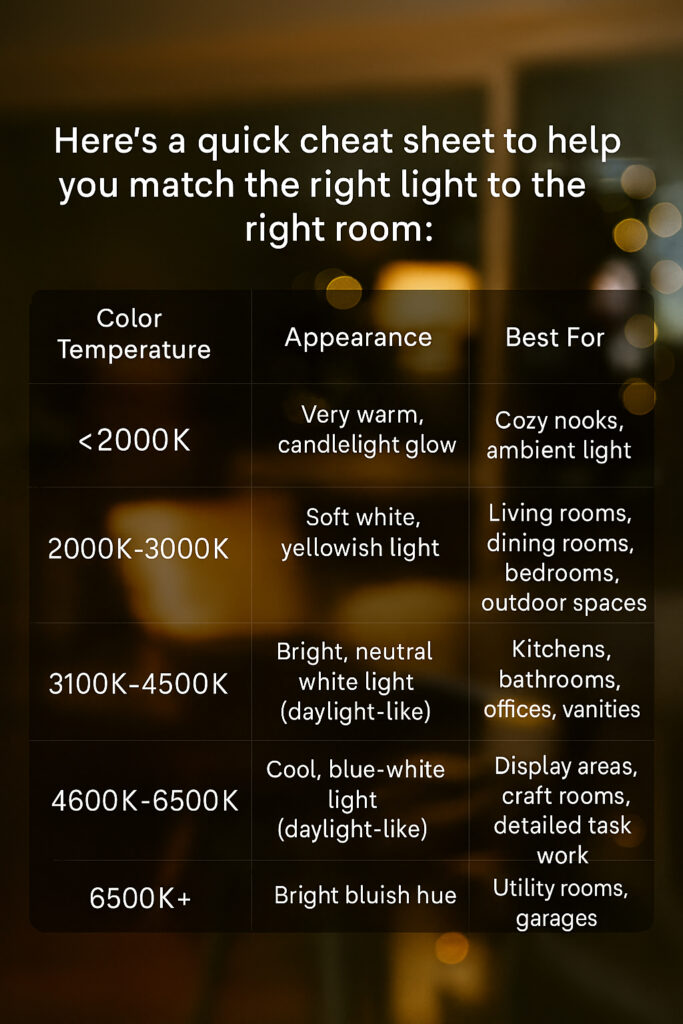
Candlelight Glow < 2000K
Vibe: Ultra-warm and ambient — think cozy cabin or romantic dinner vibes.
Use When You Want:
- Gentle, low-level illumination that feels like candlelight
- A soothing atmosphere for winding down at night
Best For: Ambient corners, Reading nooks, Bedrooms, Accent lighting in low-traffic areas
Warm White (2000K–3000K)
Vibe: Soft, welcoming glow — ideal for comfort and relaxation.
Use When You Want:
- A homey, inviting atmosphere for evenings and downtime
- Lighting that mimics traditional incandescent bulbs
Best For: Living rooms, Bedrooms, Dining rooms, Outdoor spaces like patios or covered porches
Neutral White (3100K–4500K)
Vibe: Clean and natural — perfect for daily activities and visual clarity.
Use When You Want:
- Balanced lighting that doesn’t feel too yellow or too blue
- Accurate color rendering for makeup, food prep, or reading
Best For: Kitchens, Bathrooms, Home offices, Laundry rooms, Vanities
Cool White (4600K–6500K)
Vibe: Crisp and energizing — similar to daylight.
Use When You Want:
- Maximum visibility for fine tasks or hobbies
- A bright, wake-up light for early mornings or work areas
Best For: Craft rooms, Display areas, Closets, Garages, Utility rooms, Detailed task lighting
Bright Bluish Hue (6500K+)
Vibe: Sharp and intense — very high visibility, often used in commercial or task-focused settings.
Use When You Want:
- A focused beam of bright white light
- Functional lighting for high-use, practical zones
Best For:
Garages, Workbenches, Commercial-style task areas, High-output lighting needs
Choosing the Right Bulbs (It’s Easier Than You Think)
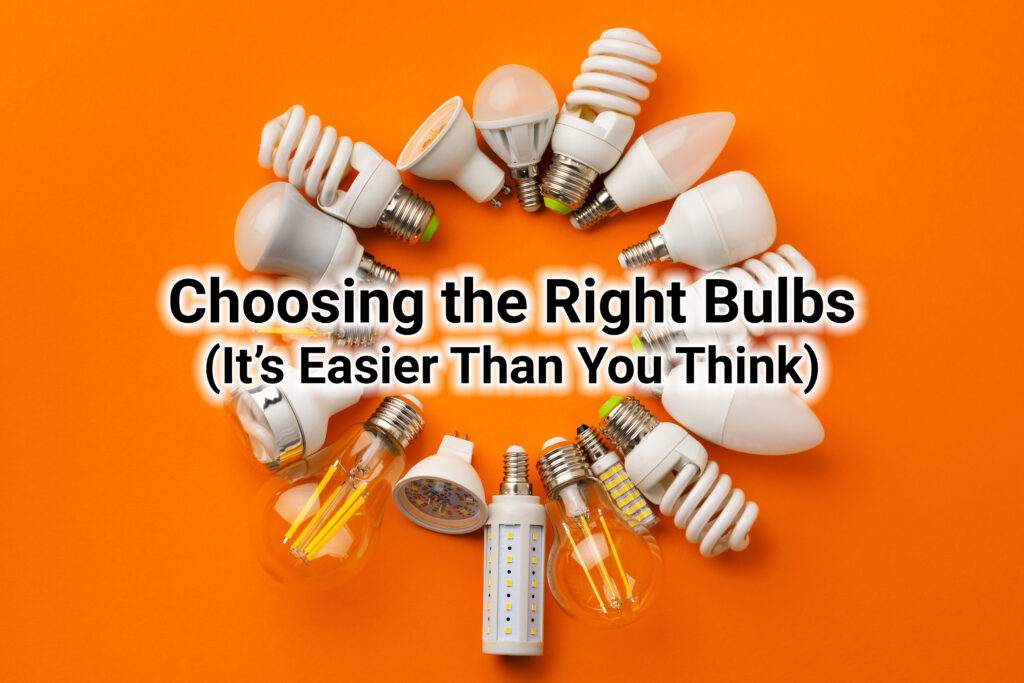
Not all bulbs are created equal and they can have a dramatic effect on your living space.
Whether you’re looking for cozy ambiance or bright task lighting, the type of bulb you choose makes a big difference.
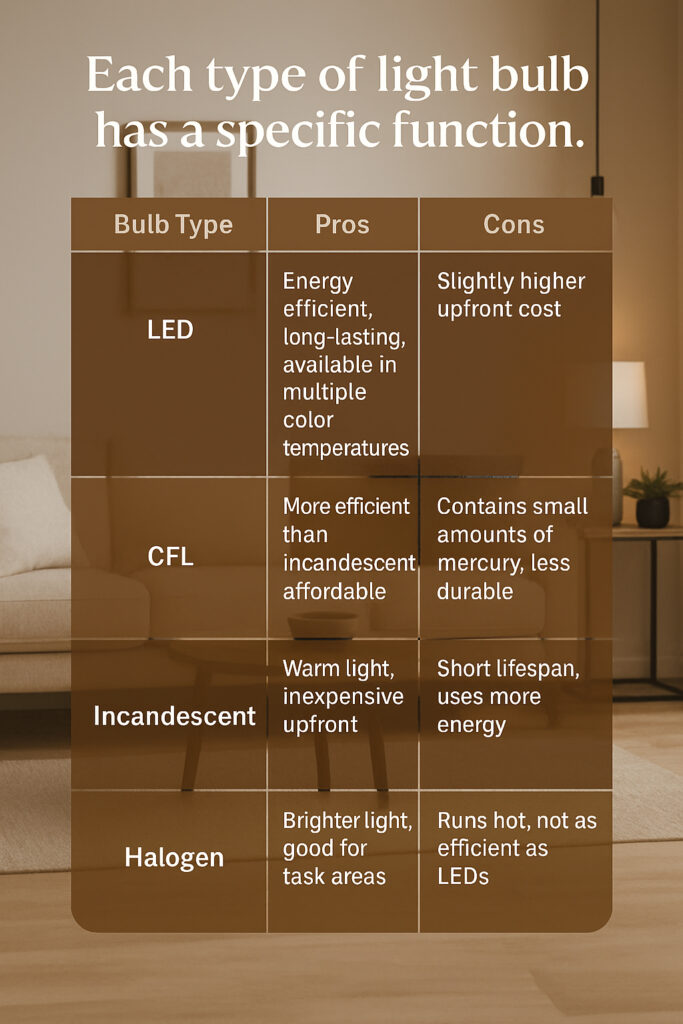
Each type of light bulb and lighting has a specific function.
| Bulb Type | Pros | Cons |
| LED | Energy efficient, long-lasting, available in multiple color temperatures | Slightly higher upfront cost |
| CFL | More efficient than incandescent, affordable | Contains small amounts of mercury, less durable |
| Incandescent | Warm light, inexpensive upfront | Short lifespan, uses more energy |
| Halogen | Brighter light, good for task areas | Runs hot, not as efficient as LEDs |
Smart Lighting & Home Tech: What’s New?
Indoor lighting has come a long way—and today’s technology puts more control in your hands than ever before. Whether you’re looking to boost ambiance, improve energy efficiency, or just make your home a little easier to manage, here are some of the top indoor lighting upgrades homeowners are loving:
These upgrades aren’t just cool—they improve convenience, security, and even energy savings.
Modern indoor lighting doesn’t stop at the fixture. Today’s homes can take advantage of smart upgrades like:
- Color-changing smart bulbs – Shift from cool white for focus to warm amber for winding down.
- Voice and app control – Adjust brightness from your couch or set schedules for different rooms.
- Motion sensors – Great for hallways, bathrooms, and closets.
- Timers and automation – Program your lights to turn on/off when you’re out of town.
- Scene settings – Set “movie night,” “work,” or “relax” modes with one tap.
Dimmer Switches
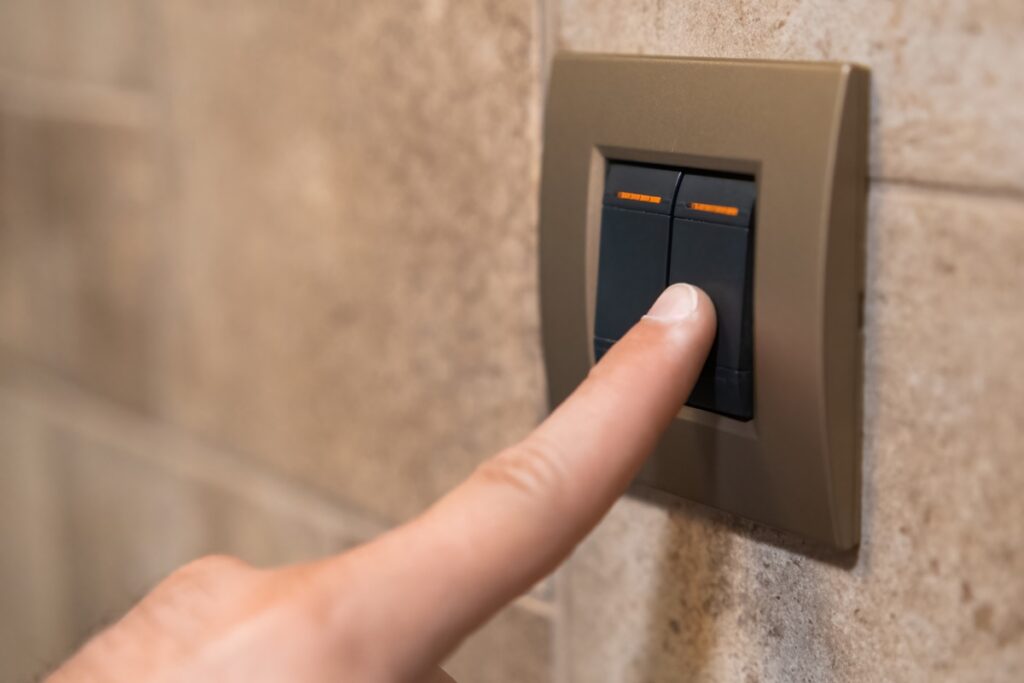
Why you’ll love them: Instantly adjust your lighting to suit the mood or time of day. Dimmer switches help reduce energy usage and extend bulb life while giving you more control over your comfort.
Best used in: Living rooms, bedrooms, dining areas.
Color-Changing Mood Lighting
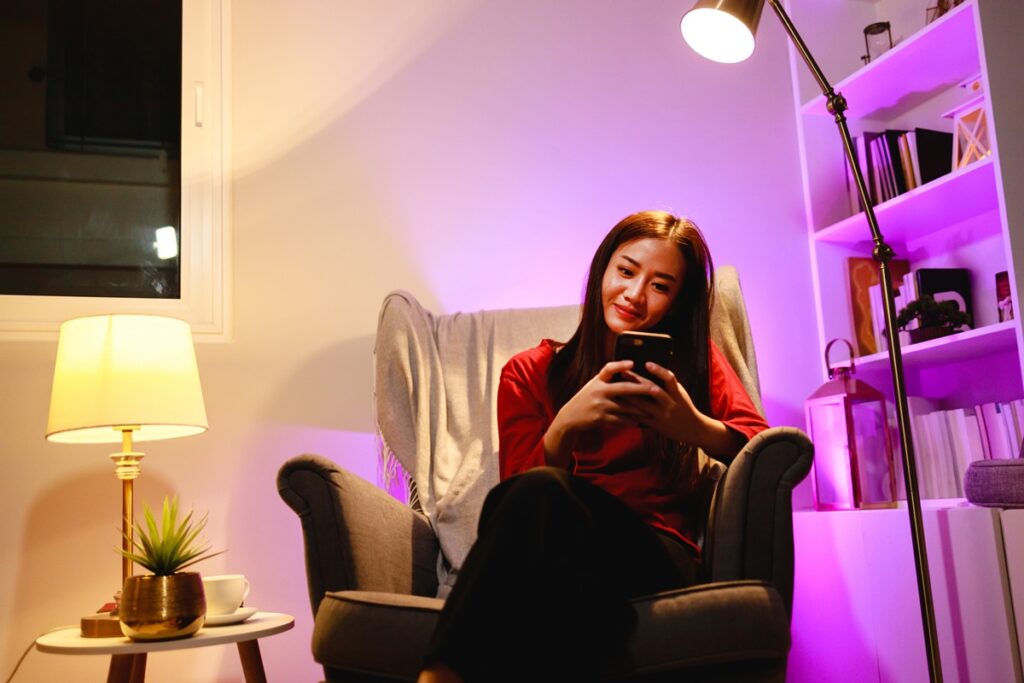
Why you’ll love it: Want cozy warm tones for movie night, then crisp daylight for morning chores? Smart bulbs let you switch it up on command.
Many let you choose from millions of colors and adjust brightness right from your phone.
Best used in: Bedrooms, home offices, entertainment areas.
Timers & Scheduling
Why you’ll love them: Set your lights to turn on or off at specific times for added security, convenience, and peace of mind.
Smart timers are perfect for travel, bedtime routines, or just keeping things hands-free.
Best used in: Entryways, hallways, bathrooms.
App-Controlled Smart Bulbs
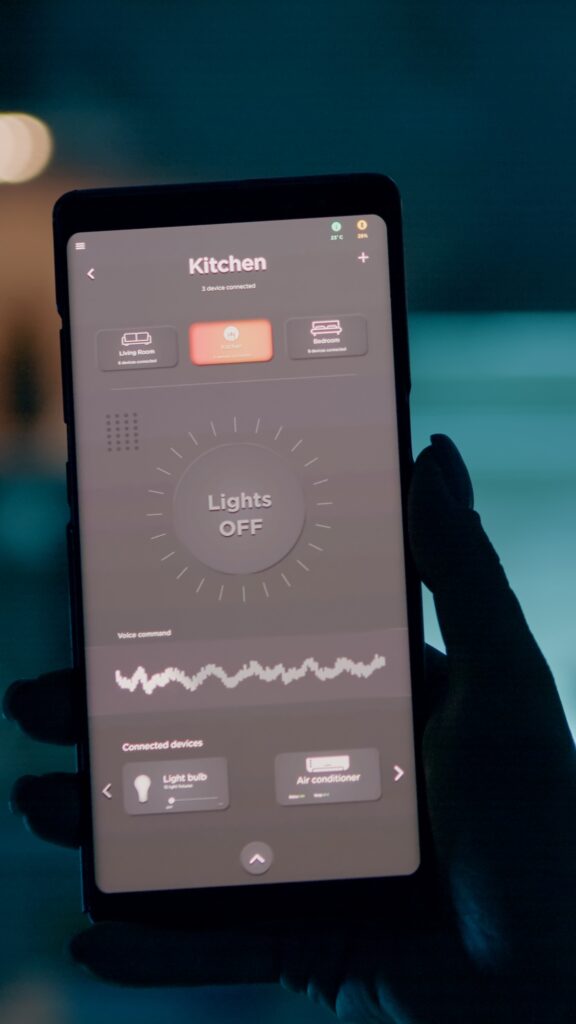
Why you’ll love them: Control brightness, color, and schedules—all from your phone or smart speaker.
Many integrate with Amazon Alexa, Google Home, or Apple HomeKit for voice control.
Best used in: Anywhere! These are ideal for homeowners who want simple automation without rewiring.
Motion-Activated Indoor Lights
Why you’ll love them: No more fumbling for switches in the dark. These lights turn on automatically when someone enters a room or opens a cabinet.
They’re great for saving energy in spaces that are used sporadically.
Best used in: Closets, laundry rooms, pantries, hallways.
Smart Lighting Hubs & Scenes
Why you’ll love them: Go beyond individual light control—set whole-house scenes that adjust multiple lights with one tap or voice command.
Create custom lighting environments for reading, entertaining, bedtime, or waking up.
Best used in: Open-concept spaces or homes with multiple smart devices.
Lighting Inspiration Gallery
Need a little visual spark? Sometimes the best way to plan your own lighting upgrades is to see what others have done.
In this gallery, we’ve rounded up real-life indoor lighting setups to help you picture the possibilities. From cozy bedrooms to statement-making kitchens, these spaces show how the right light can completely change the look and feel of your home.
Click through for ideas, styles, and solutions to light every corner—your next bright idea might be just one click away.


X
When to Call the Pros
If you’ve ever been overwhelmed by bulb options, confused by switches, or frustrated by flickering fixtures—it might be time for help. Our licensed electricians at MillTown specialize in:
- Upgrading outdated fixtures
- Installing recessed, accent, and task lighting
- Wiring dimmers, timers, and smart controls
- Solving tricky lighting problems with custom solutions
We’ll walk you through options that fit your lifestyle, budget, and aesthetic—and make sure everything’s up to code.
While swapping a bulb is simple, a whole-home lighting plan benefits from a licensed electrician.
MillTown can help you:
✅ Improve safety and meet code requirements
✅ Wire and install fixtures safely (especially chandeliers, recessed lights, and wall sconces)
✅ Integrate smart controls and dimmers with your home’s electrical panel
Indoor lighting has the power to transform your home. With the right plan, you can improve comfort, boost functionality, and even raise your property value. Whether you’re after a cozy reading nook, a more functional kitchen, or a statement-making entryway—light is where it all begins.
Need help bringing your vision to life? MillTown’s licensed electricians are ready to help you upgrade, replace, or design a lighting setup that truly fits your home.
Recent News
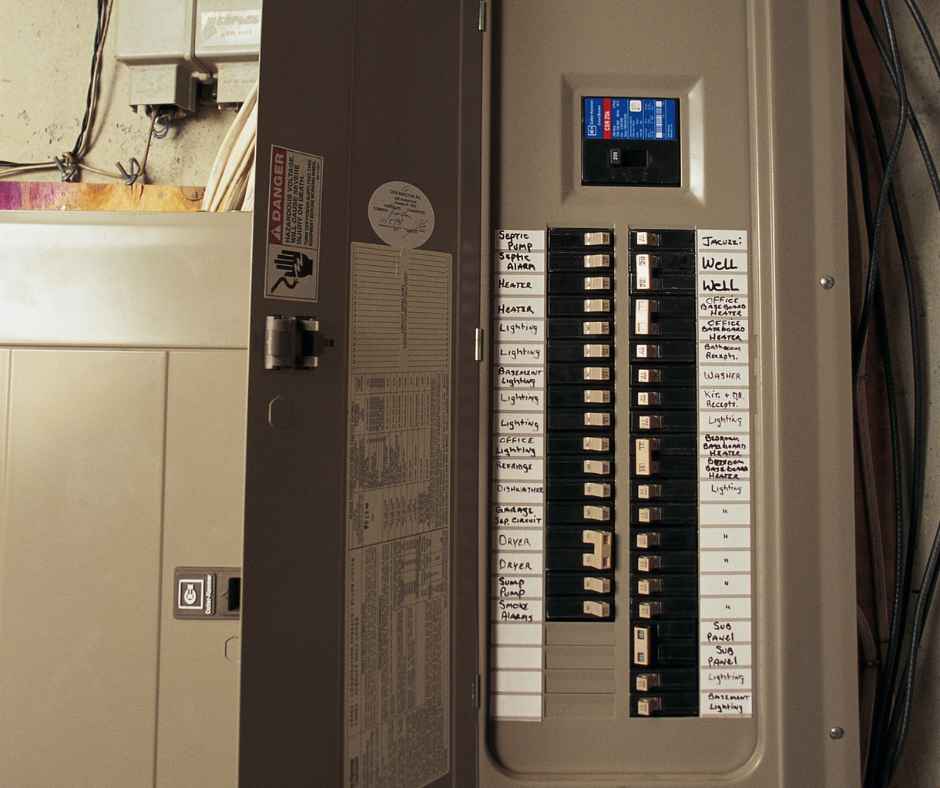
Old Wiring vs. Modern Loads: When Does a Panel Upgrade Become a Safety Necessity in Middlesex County?
A panel upgrade becomes a safety necessity when an older Middlesex County home experiences frequent breaker trips, flickering lights, warm
A panel upgrade becomes a safety necessity when an older Middlesex County home experiences frequent breaker trips, flickering lights, warm
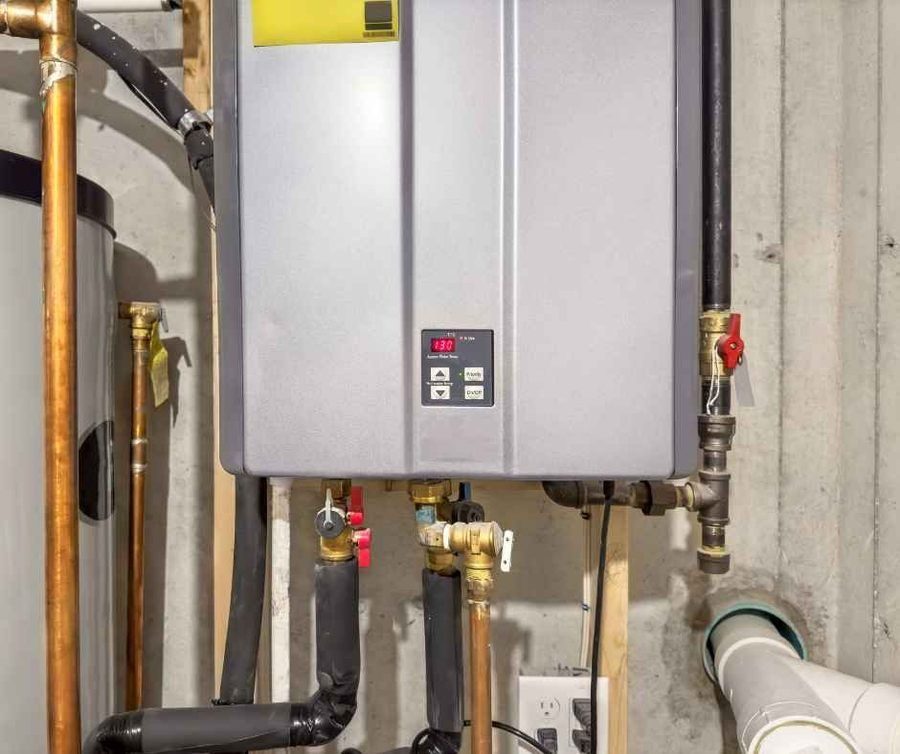
Hard Water & Tankless Systems: Why Massachusetts Mineral Buildup is Your Water Heater’s Worst Enemy
Tankless water heaters can be highly efficient, but mineral buildup can quietly reduce that performance over time. In Massachusetts homes,
Tankless water heaters can be highly efficient, but mineral buildup can quietly reduce that performance over time. In Massachusetts homes,
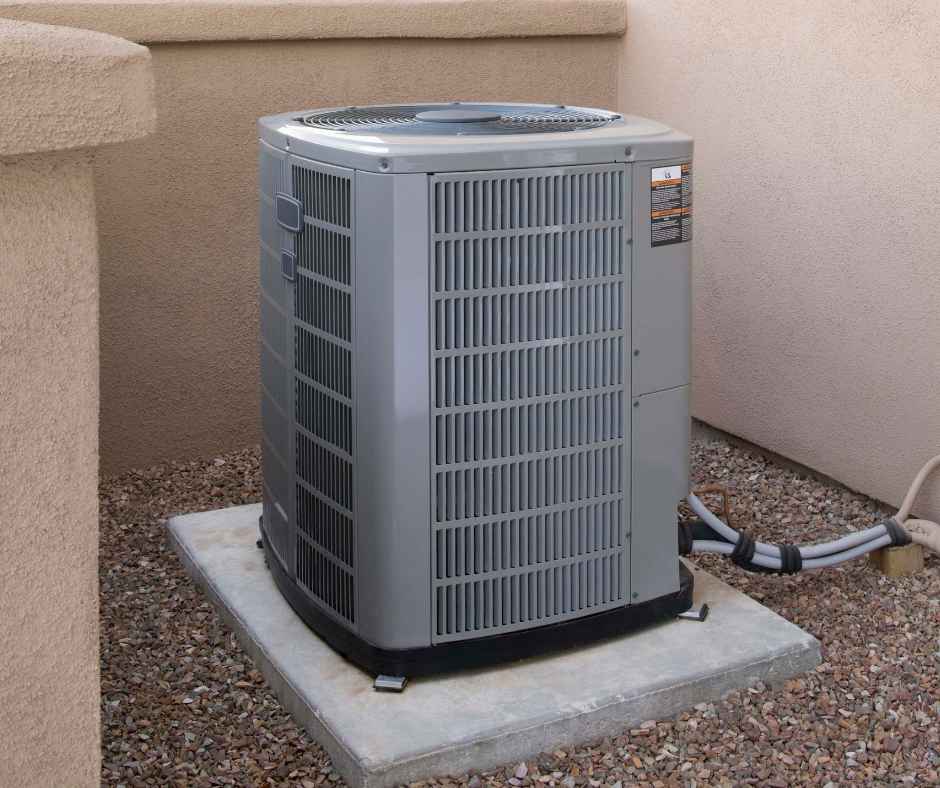
The Cost of Inefficiency: A Deep Dive Into SEER2 Ratings for Massachusetts Homeowners
SEER2 ratings matter because they show how efficiently an air conditioner or heat pump cools your home under updated testing
SEER2 ratings matter because they show how efficiently an air conditioner or heat pump cools your home under updated testing
How to Prepare Your Heating System for a Sudden New England Cold Snap
In New England, the weather can shift from a mild afternoon to a bone-chilling freeze in a matter of hours.
In New England, the weather can shift from a mild afternoon to a bone-chilling freeze in a matter of hours.
How to Lower Heating Bills Without Sacrificing Comfort in Massachusetts Homes
Surviving a Massachusetts winter requires more than just a heavy coat and a snow shovel. For homeowners across the state,
Surviving a Massachusetts winter requires more than just a heavy coat and a snow shovel. For homeowners across the state,

25 Plumbing Tips Every Massachusetts Homeowner Should Know
Keep your water flowing smoothly with advice from the experts at MillTown Plumbing, Heating, Cooling & Electrical When it comes
Keep your water flowing smoothly with advice from the experts at MillTown Plumbing, Heating, Cooling & Electrical When it comes
Common Winter HVAC Issues in Massachusetts Homes and When to Call for Service
Massachusetts winters bring freezing temperatures, heavy snowfall, and extended periods of cold weather that place constant strain on home heating
Massachusetts winters bring freezing temperatures, heavy snowfall, and extended periods of cold weather that place constant strain on home heating
Areas In Mass We Service
Acton, MA
Andover, MA
Arlington, MA
Ayer, MA
Bedford, MA
Berlin, MA
Billerica, MA
Bolton, MA
Boxborough, MA
Burlington, MA
Carlisle, MA
Chelmsford, MA
Clinton, MA
Concord, MA
Devens, MA
Dracut, MA
Dunstable, MA
Fitchburg, MA
Georgetown, MA
Groton, MA
Groveland, MA
Harvard, MA
Haverhill, MA
Hudson, MA
Lancaster, MA
Lawrence, MA
Leominster, MA
Lexington, MA
Lincoln, MA
Littleton, MA
Lowell, MA
Lunenburg, MA
Marlborough, MA
Maynard, MA
Methuen, MA
North Andover, MA
North Billerica, MA
North Chelmsford, MA
North Reading, MA
Pepperell, MA
Reading, MA
Shirley, MA
Stoneham, MA
Stow, MA
Sudbury, MA
Tewksbury, MA
Townsend, MA
Tyngsborough, MA
Wakefield, MA
Waltham, MA
Wayland, MA
West Groton, MA
Westford, MA
Weston, MA
Wilmington, MA
Woburn, MA
